
The Short Answer
Most UK laboratories set the normal reference range for total testosterone levels somewhere between roughly 8 and 30 nmol/L, though the exact boundaries vary by lab and testing method. Levels tend to peak in a man’s twenties, decline gradually with age, and the same absolute number can mean something different depending on your age and symptoms, which is why “normal” and “optimal” aren’t always the same thing.
How Testosterone Is Measured in the UK
In the UK, testosterone is measured in nanomoles per litre (nmol/L), different from the US, where nanograms per decilitre (ng/dL) is standard. As a rough conversion, 1 nmol/L is approximately 28.8 ng/dL, which is worth knowing if you’re comparing UK results against US-based information online.
Typical Reference Ranges
UK lab reference ranges vary depending on the assay and population used to establish them, but figures commonly cited include:
- Widely used range: approximately 8.7 to 29 nmol/L for adult men
- Some NHS labs: ranges as broad as 6 to 27 nmol/L, or 10 to 30 nmol/L
- British Society for Sexual Medicine (BSSM) guidance: total testosterone below 8 nmol/L is generally considered clearly low and likely to warrant further investigation or treatment if symptoms are present; between 8 and 12 nmol/L is often described as a “grey zone” where clinical judgement plays a bigger role; above 12 nmol/L is generally considered within the normal range, though men at the lower end may still experience symptoms depending on their individual physiology and free testosterone levels.
These ranges are intentionally broad, because they’re built from the general adult male population rather than adjusted for age, which is part of why the same number can mean different things for a 25-year-old versus a 65-year-old.
How Levels Change With Age (Approximate Averages)
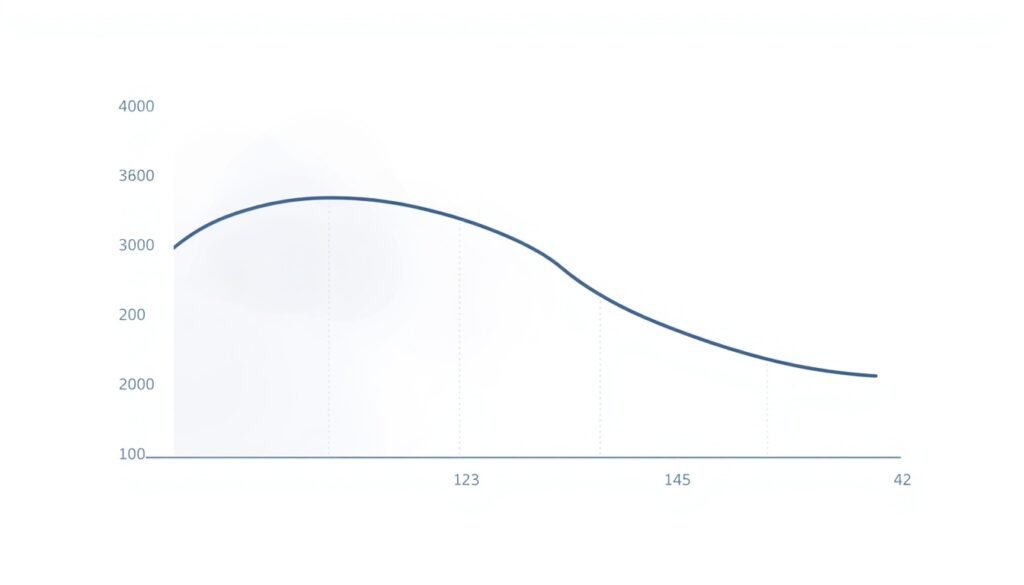
While individual variation is significant, average total testosterone by age band commonly follows a pattern like this:
| Age Range | Approximate Average Total Testosterone |
|---|---|
| 20–29 | Around 17–17.5 nmol/L (typically the highest decade) |
| 30–39 | Around 17 nmol/L, with a gradual decline beginning |
| 40–49 | Around 16–17 nmol/L |
| 50+ | Continued gradual decline, with wider variation between individuals |
Total testosterone decline with age is generally modest and gradual, often cited at around 1% per year after age 30 — but free testosterone (the biologically active portion) can decline somewhat faster, because SHBG, the protein that binds testosterone, tends to rise with age. This means two men with the same total testosterone reading at different ages may have meaningfully different free testosterone levels. See our guide on total vs. free testosterone for more on this distinction.
Why “Normal” Doesn’t Always Mean “Optimal”
Because standard reference ranges are drawn from the general adult population without age-adjustment, a result that sits within the “normal” range can still be on the lower end for your specific age group, and some men at the lower end of normal do experience symptoms, even though their result technically falls within range. This is why UK clinical guidelines increasingly emphasise interpreting your number alongside your symptoms, rather than treating the reference range as a strict pass/fail line.
When a Result Warrants a Closer Look
Generally, clinicians pay closer attention when:
- Total testosterone is below 12 nmol/L, particularly if accompanied by symptoms
- A result below 8 nmol/L is found on a repeat morning test, which is more likely to prompt referral and treatment discussion
- Free testosterone is notably low even when total testosterone sits within the “normal” range — often only apparent once SHBG is also measured
A single result should always be interpreted by a GP or specialist rather than compared in isolation to a chart. See our guide on what to do if your testosterone test comes back low.
Frequently Asked Questions
What is considered a low testosterone level in the UK?
Most UK guidance treats total testosterone below 8 nmol/L as clearly low, with 8–12 nmol/L often described as a borderline “grey zone” requiring clinical judgement alongside symptoms.
Does testosterone decline every year after 30?
On average, yes, gradually, often cited around 1% per year, though this varies considerably between individuals and some men see little meaningful decline well into later life.
Why do different labs give different “normal” ranges?
Reference ranges depend on the specific assay used and the population sample the lab drew from to establish it, which is why you may see slightly different ranges quoted by different providers.
Should I worry if my result is at the low end of “normal”?
Not necessarily on its own, this should be discussed with a GP or specialist alongside any symptoms you’re experiencing, rather than assessed by the number alone.
Is the same testosterone level “normal” for a 25-year-old and a 65-year-old?
Standard UK reference ranges don’t typically adjust for age, so the same number can carry different clinical significance depending on your age and how it compares to your own historical baseline, if known.
Related Reading
- What Is Testosterone and Why Does It Matter for Men’s Health?
- Total vs. Free Testosterone: What’s the Difference?
- Low Testosterone: Causes, Symptoms, and What to Do Next
- NHS Testosterone Testing vs. Private Providers
- How to Read and Understand Your Testosterone Test Results
This content is based on commonly cited UK reference ranges and clinical guidance as of the date of research; exact ranges vary by laboratory and are subject to change. This is for general informational purposes only and is not medical advice. See our full Medical Disclaimer.